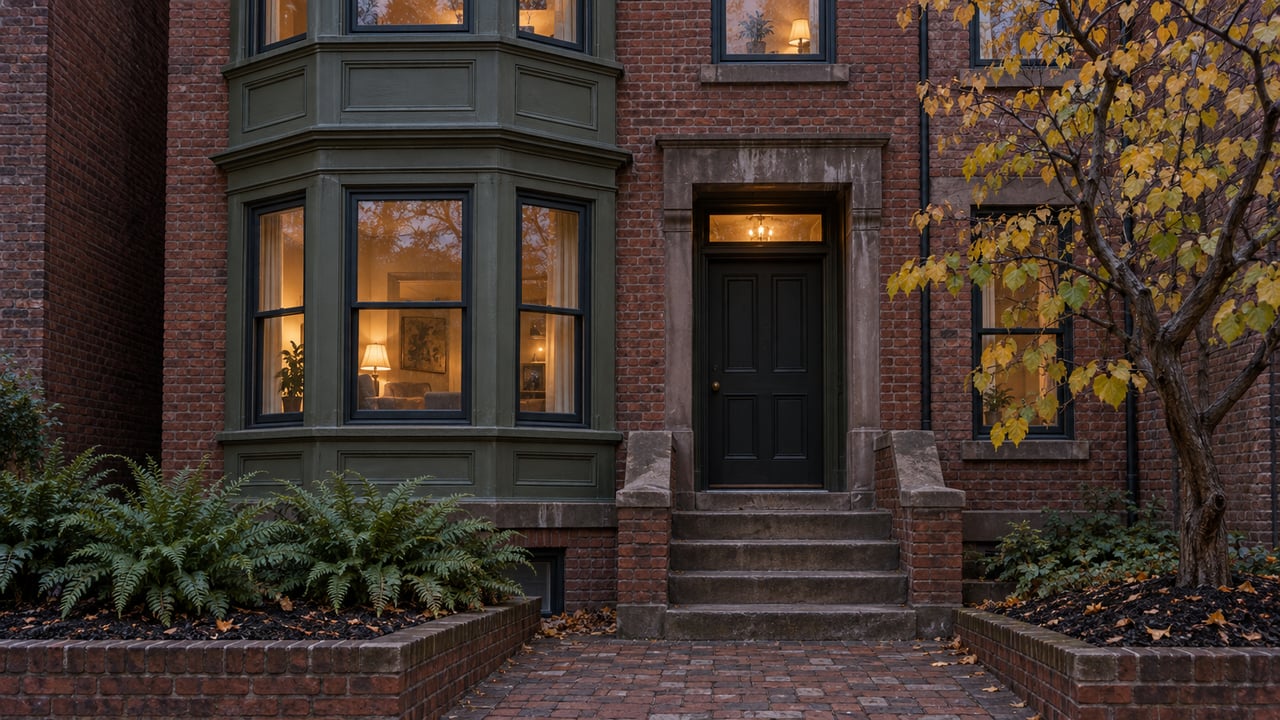
Two Logan Circle condos at the same list price can now take very different paths to a conventional loan. A rowhouse split into four units may need no project review at all. A building with fourteen units needs a full one. That has applied to every loan application dated on or after August 3, 2026, and the next deadline arrives on January 4, 2027.
The change comes from Fannie Mae Lender Letter LL-2026-03, issued March 18, 2026. Freddie Mac published matching rules the same day in Bulletin 2026-C. Few DC neighborhoods show the effect more clearly than Logan Circle, where Victorian rowhouses converted into a handful of units sit near mid-size and new condo buildings.
The Shortcut That Closed on August 3
Fannie Mae used to offer a "Limited Review" for established condo projects. Freddie Mac's version was called Streamlined Review. John Downs, a Certified Mortgage Advisor with Downs Mortgage Group at Vellum Mortgage, described the old process in a July 29, 2026 article on the rule changes. For an owner-occupied purchase with more than 10% down, the lender checked for pending lawsuits and for any single owner holding too many units, and that was about it. In his words, there was "No budget review. No reserve analysis. No structural reports. No financials."
Fannie Mae has now retired Limited Review. Established projects that used to qualify must go through Full Review, or a Waiver of Project Review when they are eligible. The retirement is mandatory for loan applications dated on or after Aug. 3, 2026. Freddie Mac retired Streamlined Review on the same date. Its established projects now go through Freddie's own Established Condominium Projects review or Reciprocal Review, unless they qualify as exempt.
The same letter set a new line in the other direction. The Waiver of Project Review now covers new and established projects with ten or fewer units. A project of five to ten units qualifies only if it is not part of a master association or larger development. According to EJF Real Estate Services, the old waiver cutoff was four units. Freddie Mac's matching category, "Exempt from Review," now covers projects of 2 to 10 units, with the same no-master-association condition for 5 to 10 units.
Downs calls the expanded small-project waiver "the most consequential change almost nobody is talking about" in a city like Washington.
Three Logan Circle Buildings, Three Review Paths
Three buildings tracked by UrbanTurf, all within a few blocks of each other, show where the line falls.
| Building | Address | Units | Type | Path for a Fannie Mae loan |
|---|---|---|---|---|
| The Topanga | 1631 13th Street NW | 4 | Renovated townhome converted to condos | Eligible for Waiver of Project Review if it meets the waiver conditions |
| 1208 M Street | 1208 M Street NW | 14 | Condo project | Full Review |
| 14Church | 1455 Church Street NW | 65 | New construction | Full Review, plus the presale requirement for new projects |
Freddie Mac uses its own names for the larger-building paths, but the ten-unit line is the same for both agencies.
UrbanTurf describes The Topanga as a four-unit condo at 1631 13th Street NW and lists it as sold out. Its next sales will be resales, and under the new rules a lender can skip the project review for a building that size. The waiver still has conditions. The project cannot carry an "Unavailable" status in Fannie Mae's Condo Project Manager, and it must meet the agency's insurance requirements.
1208 M Street has 14 units, which puts it four units over the waiver line. A purchase there financed through Fannie Mae now gets a Full Review, and a Freddie Mac loan goes through Freddie's established-project review. A buyer with a large down payment who would once have qualified for the short path gets the same review as everyone else.
14Church is a 65-unit condo building at 1455 Church Street NW. UrbanTurf's project page estimates delivery in Spring 2026. A November 2025 UrbanTurf article said end of 2026. New projects add another layer. Under Full Review, at least 50% of the units in the project or legal phase must have sold, or be under contract, to buyers who will live there or use it as a second home.
What a Full Review Actually Opens Up
For Logan Circle buildings above ten units, the review now looks at the association's records. EJF lists what the lender examines.
- The association budget and how well reserves are funded
- Insurance certificates
- Delinquency data
- Pending litigation
- Special assessments
- Structural or mechanical inspection reports from the past three years
EJF says the documentation standard that used to apply to some transactions now applies to all of them. Associations with thin records, outdated budgets or unresolved inspection findings will feel it first.
This is where buyers run into friction. Since the 2021 Surfside collapse, the condo questionnaire has asked whether the association knows of any problems with the building's safety, soundness, structural integrity or habitability. Downs writes that management companies and their attorneys often decline to answer that question. The standard reply became some version of "We are not able to answer this question. The lender must make its own determination." Lenders responded by reading reserve studies, engineer reports, financial statements and months of board meeting minutes. Downs adds that many lenders declined a project if anything looked off rather than risk getting it wrong. Under Limited Review, a buyer with a large down payment never went through that process. In an eleven-unit building or larger, a buyer with a Fannie Mae loan now does.
The stakes are real. EJF cites a survey by CAI's Foundation for Community Association Research of more than 700 board members, managers and business partners. Forty-two percent were unsure whether their community qualified for federally backed financing. Among communities already found ineligible, 64% said the denial had hurt home sales or property values.
January 4 Puts a Number on the Budget
The second deadline falls about two months after this post goes up. For Full Review loan applications dated on or after Jan. 4, 2027, the minimum replacement reserve contribution rises from 10% to 15% of the association's annual budgeted assessment income. Freddie Mac set the same increase for applications received on or after that date. Projects of ten or fewer units that qualify for the waiver or exemption skip the project review where this figure gets checked, so in practice the floor applies to buildings above the ten-unit line.
EJF works through an example. An association that collects $500,000 a year in assessments would have to put at least $75,000 into reserves, up from $50,000. The extra $25,000 has to come from higher assessments, lower operating spending, or both. EJF also describes a way around the flat percentage. An association with a reserve study completed or updated within the last three years, and funded at the highest level that study recommends, is not held to the 15% floor. EJF notes that DC has no statutory reserve-study requirement, unlike Maryland and Virginia. Fannie Mae's letter also bars the "baseline funding" method, which lets reserves approach zero.
Downs takes a calmer view. From the budgets he has seen locally, he says many DMV buildings have already raised fees and are reserving at or near 15%. He expects January to formalize changes that well-run associations have already made. He also writes that "Loan approval tells you a building is sound, not where the dues are headed." For a buyer looking at a Logan Circle building with more than ten units, the budget now affects two things. Lenders use it to decide whether to finance the building, and it signals whether dues may rise after January.
Some parts of the letter make things easier. The 50% investor-concentration limit for Full Review is gone, which EJF says matters in the District, where investor-owned units are common in many established buildings. Roofs may now be insured at actual cash value. A $50,000 cap on per-unit master-policy deductibles has applied since July 1, 2026.
Why This Lands Harder in a Slower Fall
These rules took effect as condo inventory across the region grew. In September 2026, Bright MLS counted 4,891 active condo listings across the Washington, D.C. Metro, up 30.3% from a year earlier. Median days on market rose six days to 35, and closed sales fell 16.3% to 851. The metro condo median sold price was $385,000, up 1.6%. Those are metro-wide condo figures, not District-only ones. Bright says Bright Stats, its ZIP-code-level reporting tool, launches in late October.
Across all home types in the District, the DC Realtors September 2026 report shows a median sold price of $660,000, down 2.9% year over year, and 398 closed sales, down 6.8%. Average days on market was 46, and homes sold for an average of 95.7% of their original list price. Bright MLS attributed the slower September activity across the region to elevated mortgage rates.
With more listings to choose from, a buyer comparing two Logan Circle condos is also comparing two underwriting paths. In a building with ten or fewer units, the lender may never open the association's books. In a building with eleven or more, the lender will review the budget, reserves and recent inspection reports, and from January the reserve contribution must meet a higher minimum. Sellers in larger buildings can prepare by gathering the association's current budget, reserve study and inspection reports before listing, since a buyer's lender will ask for them.
This post is general information and not legal, financial or lending advice. Project eligibility depends on the specific building and lender, so confirm your situation with your loan officer and, where relevant, an attorney.
FAQ
Does a building with ten or fewer units skip every review? It can skip the project review, but the waiver has conditions. Fannie Mae requires that the project not carry an "Unavailable" status in Condo Project Manager and that it meet the agency's insurance requirements. Projects of five to ten units cannot be part of a master association. Your own credit, income and appraisal are still underwritten as usual.
Do the rules apply to FHA or cash purchases? LL-2026-03 and Bulletin 2026-C cover conventional loans sold to Fannie Mae and Freddie Mac. Other loan programs have their own condo standards, and your lender can confirm which ones apply to you.
Is the 15% reserve minimum in effect now? No. For Fannie Mae, it applies to Full Review applications dated on or after Jan. 4, 2027. Freddie Mac's version applies to applications received on or after the same date.
If you're weighing a Logan Circle condo this fall, the building's unit count and its association records belong in the comparison alongside price and fees. Roger Taylor and the team can help you request the right association documents early and coordinate with your lender before you write an offer. Let's Connect.